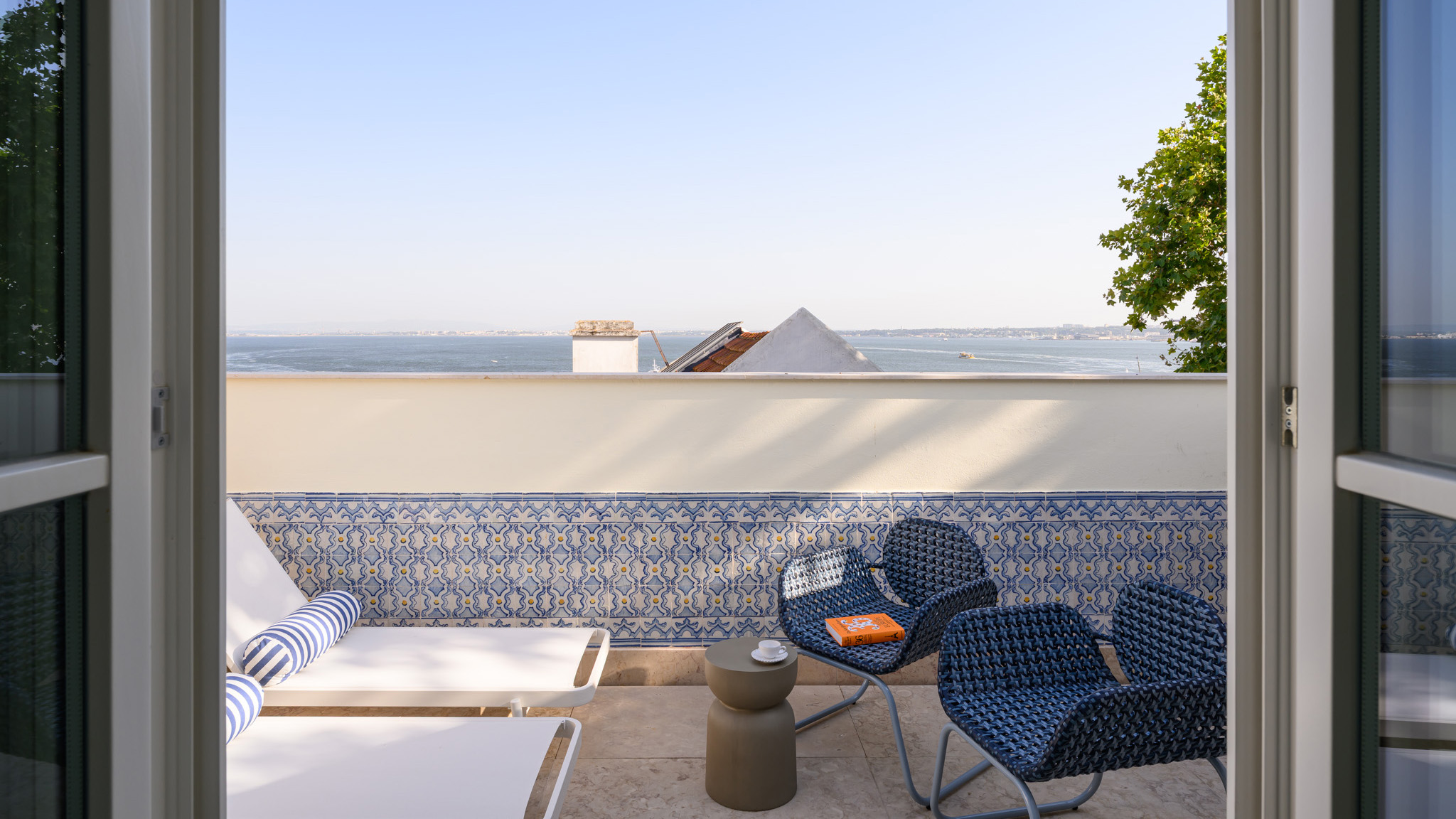
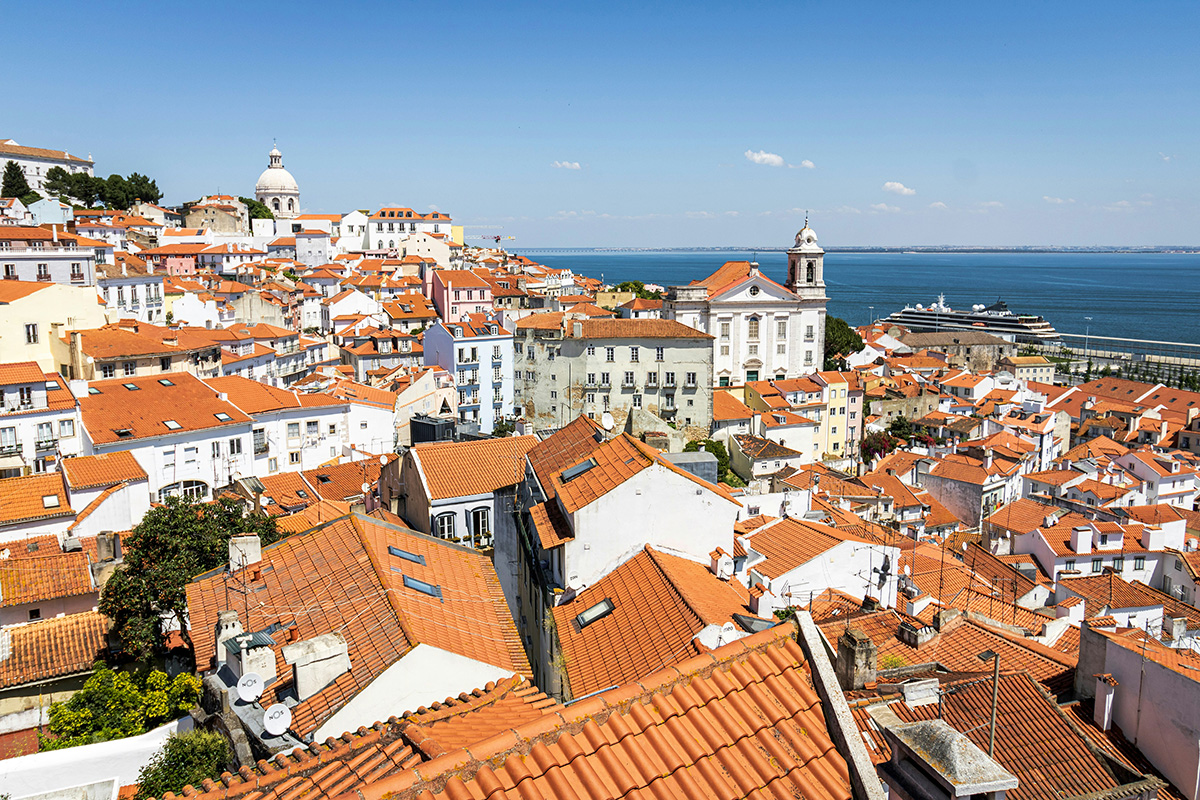
There is a particular moment that most Alfama first-timers describe the same way. You step out of your door in the early morning, before the tour groups arrive, before the tram rattles past, and the city is just there. Terracotta rooftops cascading down to the Tagus. The smell of bread from a bakery two streets over. The distant sound of a guitar drifting from a window that someone forgot to close. It is not a postcard version of Lisbon. It is the actual thing.
Alfama is one of the oldest continuously inhabited urban neighbourhoods in Europe. It survived the catastrophic 1755 earthquake that levelled most of Lisbon, which is why its streets still twist and climb in the same organic, unplanned way they did when the Moors settled here in the 8th century. This is not a neighbourhood designed for visitors. It was designed for life, and that is precisely what makes it so extraordinary to stay in.
This guide covers everything a discerning traveller needs to know before choosing to base themselves in Alfama: what the neighbourhood is actually like to live in day-to-day, how it compares to other areas of Lisbon, which experiences are genuinely worth seeking out, and why the right accommodation makes all the difference.

What Kind of Neighbourhood Is Alfama, Really?
Before booking, it helps to understand what Alfama actually is, and what it is not.
Alfama is a residential neighbourhood first. It climbs the eastern hill of Lisbon from the banks of the Tagus up toward the ramparts of Castelo de São Jorge, a grid-less labyrinth of becos (dead-end alleys), stone stairways, and miradouros (viewpoints) that open suddenly onto sweeping views of the river. It is the historic heart of fado, the melancholic Portuguese music genre recognised by UNESCO as Intangible Cultural Heritage, and it has been home to fishermen, Moorish settlers, and, more recently, creatives, musicians, and a quiet influx of those who prefer their Lisbon authentic rather than polished. Learn more about the neighbourhood in our Lisbon Neighborhood Guide.
What it is not: a party district. Alfama quiets down well before Bairro Alto does. It is not a shopping destination in the conventional sense, though its Sunday flea market at the Feira da Ladra is one of the finest in Southern Europe. And it is not easy in the way that flat, tourist-optimised neighbourhoods are easy. The cobbled streets are steep in places, the lanes are narrow, and getting here requires either embracing the walk or knowing how to navigate Lisbon’s public transport with confidence.
For luxury travellers, particularly families and groups who value space, privacy, and a genuine sense of place, these qualities are not drawbacks. They are the point.
Why Luxury Travellers Choose Alfama Over Central Lisbon
The most common misconception about Alfama is that it is inconvenient. In reality, the neighbourhood sits at the geographic crossroads of Lisbon’s most important districts, and at the right address, the entire city is within walking distance or a short ride.
Location, in concrete terms. From Rua de São João da Praça, in the lower heart of Alfama, you are a 3-minute walk from the Miradouro de Santa Luzia, Lisbon’s most bougainvillea-draped viewpoint. The Portas do Sol viewpoint, with its panoramic sweep over the Tagus, is 5 minutes on foot. The Sé Cathedral, founded in 1147, is 7 minutes. Praça do Comércio and the riverfront are 12 minutes. The iconic Tram 28 stops a short walk away, connecting you to Chiado, Estrela, and Campo de Ourique. A covered parking garage is reachable in under 3 minutes by car.
Space and privacy that hotels simply cannot offer. The most compelling argument for luxury apartment accommodation in Alfama is not the price. It is the experience. Families travelling with children, multigenerational groups, or couples who prefer to have a kitchen, a private terrace, and a living room that does not require a key card to enter will find that a well-appointed apartment in Alfama delivers something that no five-star hotel room can: the feeling of actually living somewhere, rather than passing through it.
Quiet at night. Unlike the nightlife districts of Bairro Alto or Cais do Sodré, Alfama settles into a genuine residential calm after 10pm. Guests who have stayed in the neighbourhood consistently remark on how unexpected this is. The same streets that are pleasantly animated during the day feel almost village-like after dark.
The view. Significant portions of Alfama look out over the Tagus estuary, one of the widest river mouths in Europe. Watching the light change over that water, from the rose-gold of early morning through the silver of midday to the amber of a summer evening, is not a background experience. It is the experience.
The History Written Into Alfama's Streets
To stay in Alfama is to sleep inside several layers of history simultaneously.
The neighbourhood takes its name from the Arabic al-hamma, meaning thermal spring or warm baths, a reminder that this hillside was prime real estate for the city’s Moorish rulers long before the Christian Reconquista of 1147. The winding street plan you navigate today, climbing, doubling back, opening suddenly into small squares, follows the same logic as an 8th-century settlement built for defence and community, not for cars or tourism.
The 1755 Lisbon earthquake, one of the deadliest in European history, destroyed most of the city’s lower neighbourhoods entirely. Alfama’s position on the hillside, combined with its older and more compact construction, meant it survived largely intact while Baixa and Chiado were rebuilt from scratch. This is why walking through Alfama genuinely feels different from walking through the rest of the city. It is not a reconstruction. It is the original.
Woven into this physical history is the story of fado. Alfama is considered the true home of this music, not its commercial centre (that would be the touristy fado houses of Mouraria and the Bairro Alto), but its emotional and residential heartland. Many of the great fadistas of the 20th century lived, performed, and died in these streets. The most celebrated of all, Amália Rodrigues, had deep personal ties to this neighbourhood: the guitarist in her band, her musical partner for years, lived and worked in a building on Rua de São João da Praça. That same building stands today, transformed into Casagrand Lisboa, its original 13,500 hand-painted azulejo tiles still intact on its walls.

Alfama Viewpoints: The Ones Worth Seeking Out
No guide to Alfama is complete without an honest assessment of the viewpoints. There are dozens scattered across the hillside, some genuinely spectacular, some overcrowded with tour groups by 10am, some known almost exclusively to locals.
Miradouro de Santa Luzia is the most classically beautiful. Framed by bougainvillea and tiled with azulejo panels depicting pre-earthquake Lisbon, it looks out over the terracotta rooftops and the river below. It sits closest to the lower end of Alfama, a 3-minute walk from Rua de São João da Praça, and tends to be quieter in the early morning and late afternoon. The panels on the wall showing old Lisbon are worth studying closely.
Miradouro das Portas do Sol is the most dramatic. Positioned slightly higher on the hill, it offers a wider panorama and has a terrace bar for those who want to sit with a coffee and a view. The statue of Saint Vincent, Lisbon’s patron, stands at its centre. Tram 28 stops directly here, which means it gets busy. Arrive before 9 am for the best version of this experience.
Miradouro da Graça is the locals’ choice. Positioned above Alfama in the Graça neighbourhood, it looks down over the Castelo de São Jorge with the Tagus stretching out behind it. The bar here is reliably good, the crowd is more mixed, and the perspective, looking across rather than down, gives a different and arguably more intimate sense of the city’s scale.
Miradouro da Senhora do Monte is the highest and most sweeping. On a clear day, the view spans 210 degrees across the entire historic centre: the castle, the river, the bridge, Cristo Rei on the far bank. It requires a slightly longer walk uphill, which keeps the crowds smaller. Go at sunset in summer, when the light on the water is extraordinary.
The practical advice for all of them: go early, bring water in summer, and resist the instinct to photograph everything immediately. Sit for a while first.
What to Do in Alfama: A Curated List
Alfama rewards exploration rather than a checklist approach, but the following experiences are genuinely worth building your stay around.
Castelo de São Jorge. The Moorish castle that crowns Alfama’s hill is more than a viewpoint. It is an active archaeological site with ongoing excavations, a good museum, and one of the best restaurant terraces in the city. It is a 10-minute uphill walk from the lower neighbourhood. Go in the late afternoon, when the crowds have thinned and the light is at its best.
Feira da Ladra. Every Tuesday and Saturday morning, the flea market at Campo de Santa Clara, a 10-minute walk from Rua de São João da Praça, fills with antiques, vintage ceramics, old Portuguese books, and the kind of unhurried browsing that city life rarely allows. The azulejo tiles sold here are often original; ask about their provenance.
Museu de Artes Decorativas Portuguesas. Set in a 17th-century palace at Largo das Portas do Sol, this museum houses one of the finest collections of Portuguese decorative arts in the country. The azulejos, silverwork, and furniture span four centuries, and the rooms themselves are extraordinary. Rarely crowded.
An evening of fado. The right fado experience in Alfama is not a packaged show with a tourist menu. It is a small, family-run house, like A Baiuca on Rua de São Miguel, where the audience is expected to be silent, where the music is genuinely raw, and where the reservation list fills up days in advance. Book before you arrive.
Walking the backstreets of Mouraria. Alfama’s neighbour and former border zone during the Moorish period, Mouraria has become one of the most culturally vibrant and gastronomically interesting parts of Lisbon. The area around Intendente is particularly worth an afternoon.
The Tagus riverfront. The stretch of waterfront below Alfama, walkable from the neighbourhood in 12 minutes, includes Praça do Comércio, the Cais das Colunas, and some of the best views of the 25 de Abril bridge. In the evening, the riverfront is one of the most pleasant places in the city to simply walk.

How to Navigate Alfama: Practical Information
Getting around on foot. The majority of Alfama’s main points of interest are walkable from the lower neighbourhood. The streets are cobbled and sometimes steep, so comfortable shoes are not optional. Many of Alfama’s most beautiful lanes are not driveable; walking is the only way to actually see them.
Tram 28. The historic tram that runs through Alfama is one of the city’s most iconic experiences. It passes through the neighbourhood on its route, stopping at Santa Luzia, Portas do Sol, and the Sé. In 2026 the route is partially split: trams run normally between Martim Moniz and Praça Luís de Camões, with replacement buses covering the remaining stretch to Campo de Ourique (Prazeres). Transfers happen at Praça Luís de Camões and the ticket remains valid across both. An on-board ticket costs 3.30 euros; a 24-hour pass costs 7.25 euros and covers all Carris transport. With the Lisboa Card, the tram is included free.
Parking. There is a covered car park reachable in under 3 minutes from Casagrand Lisboa, an important detail for guests arriving by car from the airport or from elsewhere in Portugal. Street parking in Alfama itself is extremely limited.
The airport. Lisbon’s Humberto Delgado Airport is approximately 20 to 25 minutes from Alfama by taxi or rideshare, depending on traffic. Casagrand Lisboa offers luxury transfer services for guests who prefer a seamless arrival. The Metro is a longer but viable option.
Language. English is widely spoken throughout Alfama’s hospitality and tourism sectors. Some of the older, family-run tabernas operate primarily in Portuguese, where a phrasebook or translation app proves a useful companion.
Alfama vs. Other Lisbon Neighbourhoods: An Honest Comparison
Luxury travellers who have done their research will often be weighing Alfama against two or three alternatives. Here is an honest assessment.
Alfama vs. Chiado. Chiado is Lisbon’s most sophisticated shopping and dining district: elegant, flat, and extremely convenient. It is also one of the most expensive neighbourhoods to stay in, and the accommodation there tends toward boutique hotels rather than spacious apartments. For those whose primary interest is high-end retail, gallery-hopping, and the Bairro Alto nightlife, Chiado is more practical. For those who want space, a sense of place, and genuine Lisbon character, Alfama wins decisively.
Alfama vs. Príncipe Real. Príncipe Real, the tree-lined, antique-dealer neighbourhood west of Chiado, has become increasingly popular with affluent visitors for its independent restaurants and design hotels. It is lovely, and also, to put it plainly, somewhat generic in the way that well-curated neighbourhoods often become once they are discovered. Alfama is still primarily a neighbourhood where people live.
Alfama vs. Baixa. Baixa, the Pombaline grid at the city’s centre, is convenient for orientation but thin on atmosphere and heavily touristic. The accommodation there is primarily business hotels and chain properties. For any traveller who values character, Baixa is the least interesting choice.
Alfama vs. Mouraria. Mouraria is Alfama’s immediate neighbour and shares some of its character, but it is a more densely populated and less obviously scenic neighbourhood. It is worth visiting for food and culture, but less ideal as a base for visitors who want quieter streets and river views.
For luxury travellers, particularly families, groups, and couples seeking a genuine immersion in Lisbon’s most historically rich neighbourhood, Alfama is, in our considered view, the right choice.
Where to Stay in Alfama: The Casagrand Lisboa Experience
The building at Rua de São João da Praça 83 has been many things over the past century: a school, a sports club, a fado house, a jazz club, and the home of Amália Rodrigues’s personal guitarist. Today, restored with exceptional care and retaining over 13,500 of its original hand-painted azulejo tiles, it is Casagrand Lisboa, a collection of luxury apartments that combine the building’s history with the standard of a five-star property.
Apartments range from the intimate Deluxe Essential (70 m², up to 2 guests) to the iconic Premium Sea View (220 m² duplex, up to 8 guests), with two terraces overlooking the Tagus. Between these two extremes, there are options for every group size: the Deluxe Superior with river views and warm materials, the Deluxe Terrace Sea View and the Elegant (122 m², up to 6 guests, with generous space).
What distinguishes every apartment in the building is not only the quality of the finish, the high restored ceilings, the contemporary design layered over authentic historical fabric, but the service. The concierge team, led by Hugo, is consistently described by guests as the decisive factor in their experience. Guests arrive to find recommendations already waiting: restaurants that don’t appear on any app, fado evenings that require advance booking, walking routes that avoid the crowds entirely. The reception desk is staffed daily from 8 am to 11 pm.
The full range of services includes room service, daily housekeeping, laundry, luxury transfers, and wellness therapies. Everything expected of a five-star property, delivered in an apartment that feels genuinely like home.

Frequently Asked Questions About Staying in Alfama
Is Alfama safe for tourists? Yes. Alfama has a well-earned reputation as one of Lisbon’s safest and most community-oriented neighbourhoods. Standard urban precautions apply, being mindful of pickpockets on crowded tram routes, particularly Tram 28, but the residential character of the neighbourhood means it feels genuinely safe to walk at any hour.
Is Alfama suitable for families with young children? Very much so, with the right accommodation. The cobbled streets require care with pushchairs, and the uphill sections can be tiring for small children. A large, well-equipped apartment with a full kitchen, separate bedrooms, and private outdoor space makes a family stay infinitely more manageable than a hotel room. Casagrand Lisboa provides cots for infants on request
How do I get to Alfama from Lisbon Airport? By taxi or rideshare, approximately 20 to 25 minutes depending on traffic. Casagrand Lisboa offers luxury airport transfer services. By public transport, the journey involves the Metro and a bus connection, taking approximately 40 to 50 minutes.
When is the best time to visit Alfama? Alfama is a year-round destination, but spring (April to May) and autumn (September to October) offer the best balance of pleasant weather, manageable crowds, and full cultural programming. Summer is busier and hotter, though the long evenings are extraordinary. December brings the festive season with genuine local character rather than commercial spectacle.
Do I need a car to stay in Alfama? No. The neighbourhood is extremely well-connected by public transport, and most of Alfama’s main attractions are walkable from a central address. A car is useful for day trips to Sintra, Cascais, or the Alentejo, and Casagrand Lisboa’s team can arrange transfers for those as well.
What makes a luxury apartment in Alfama better than a hotel? Space, privacy, and the ability to live at your own pace. A luxury apartment gives you a kitchen (which matters for families, for dietary needs, for the simple pleasure of breakfast on a private terrace without a restaurant schedule), living areas where the whole group can be together, and the freedom to come and go without the rhythms of hotel life. In a building like Casagrand Lisboa, you also have full service, including housekeeping, concierge, and room service, so you sacrifice nothing in terms of support.
The Right Way to Experience Alfama
There is no single correct way to spend time in this neighbourhood. But there is a wrong way: treating it as a day trip, arriving after the morning rush, and leaving before dinner. Alfama reveals itself slowly. The winding backstreet that seemed confusing on the first morning becomes a shortcut by the third. The taberna owner who barely looked up on the first visit smiles in recognition on the second. The view from the terrace at 7am, when the city is still and the Tagus is catching the first light, becomes something you think about long after you have gone home.
The travellers who get the most from Alfama are those who stay long enough to feel it shift from unfamiliar to familiar. A minimum of three nights, ideally five or seven, in an apartment rather than a hotel room, with a kitchen, a terrace, and a team who knows the neighbourhood well enough to tell you which fado house is worth the wait and which restaurant is better on a Tuesday.
That is what Alfama is for.
Discover your apartment at Casagrand Lisboa, from intimate suites to four-bedroom duplexes with Tagus terraces. Explore the apartments at casagrand.com or contact the team directly to discuss availability.